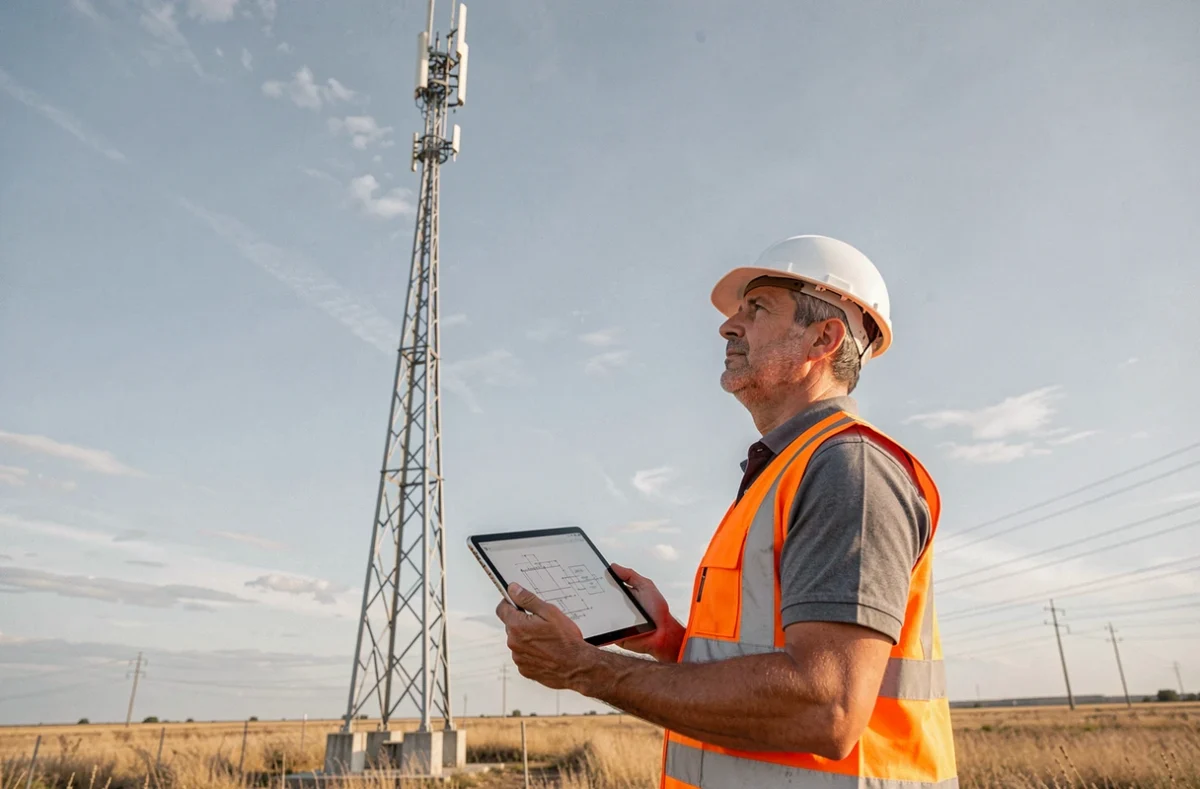
Installing a 5G tower in France does not cost the same depending on whether a new mast is erected or new equipment is added to an existing mobile site. The ANFR reports that nearly all 5G installations are located on sites that already host other generations of networks. This distinction influences the entire budget, timeline, and administrative procedures to be anticipated.
Cost of installing a 5G tower: existing site or new mast
The range most cited by industry professionals places the cost of installing a 5G antenna between 150,000 and 300,000 euros, excluding land acquisition or rental. This amount covers very different realities depending on the nature of the project.
| Type of deployment | Indicative cost range | Estimated timeline |
|---|---|---|
| Adding 5G equipment to an existing site (4G) | Lower end of the range (around 150,000 euros) | Several months after obtaining permits |
| Construction of a new mast with 5G equipment | Upper end (up to 300,000 euros and beyond) | Significantly longer (civil engineering, foundations, connections) |
On an existing site, civil engineering is limited: the support is already in place, and electrical and fiber connections are often available. The budget then focuses on antennas, radio equipment, and software integration.
A new mast adds foundations, the metal structure, connection to the electrical network, and fiber optic link. Each item significantly impacts the final bill. To delve deeper into these expense items, the 5G installation services on La Revue de l’Entreprise detail the variables that can shift a project from one end of the range to the other.
Annual maintenance and hidden costs of the 5G network
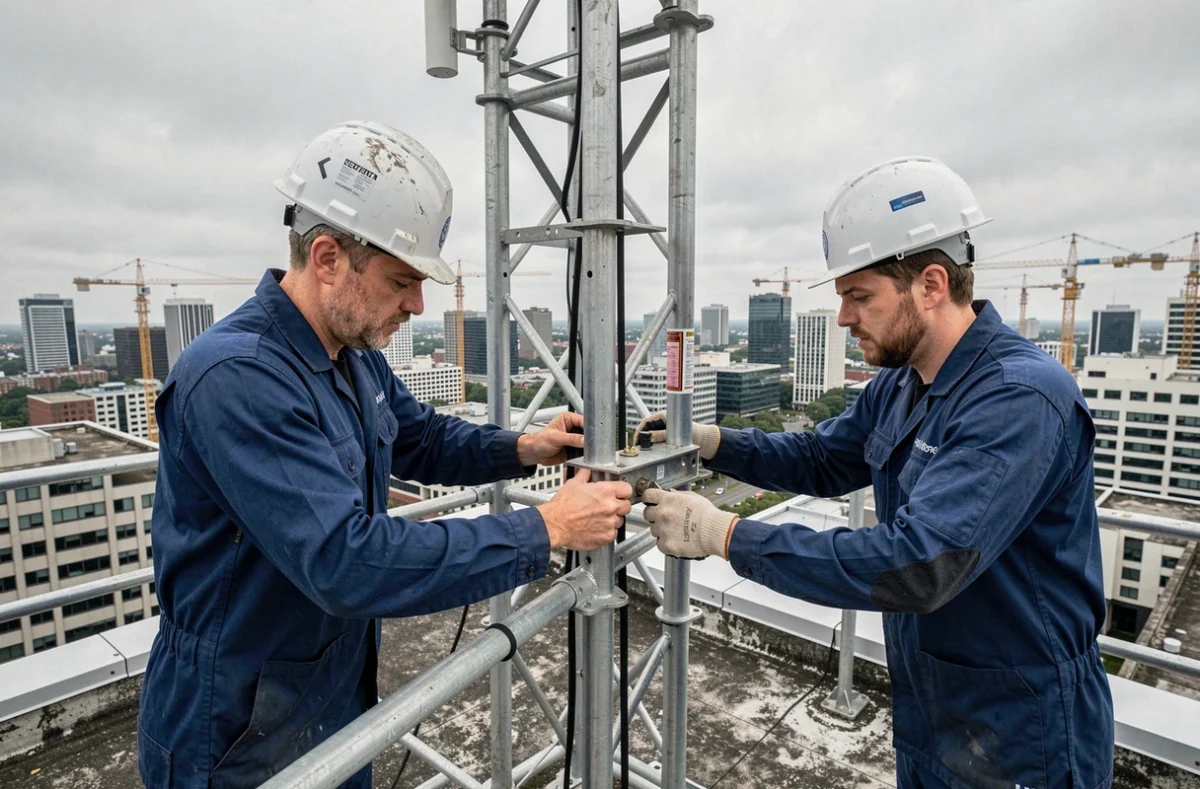
The installation price represents only part of the investment. Annual maintenance can reach up to 10% of the initial investment each year, not including equipment upgrades or adjustments to regulatory changes.
On a 5G network, software updates are frequent. Operators must also plan for the gradual replacement of components whose lifespan is shorter than that of the mast itself. A poorly sized site from the start generates recurring additional costs that are difficult to absorb.
Maintenance items to anticipate
- Firmware updates for radio equipment, often quarterly, requiring technical intervention on-site or remotely depending on the configuration
- Replacement of power modules and cooling systems, the frequency of which depends on the site’s climatic exposure
- Network supervision (24/7 monitoring), which can be internalized or outsourced to a specialized provider with a guaranteed SLA
- Adaptation to new frequency bands authorized by Arcep, such as the recently approved reciprocal rentals in the 1800 MHz band
An underestimated maintenance budget jeopardizes the site’s profitability over five years. Operators that share their infrastructure mechanically reduce this item, as the costs of supervision and maintenance are spread among several operators.
Urban planning procedures and regulatory timelines for a 5G antenna
The timeline for a rapid deployment often stumbles over administrative steps. The operator must submit a information file to the mayor or the president of the intercommunal authority one month before filing their urban planning authorization request. This obligation, sometimes unknown to project leaders, delays the commissioning date accordingly.
The type of authorization required does not depend solely on the height of the mast. The technical rooms and associated installations are also taken into account: a prior declaration may suffice even for a mast exceeding twelve meters, provided that the technical rooms remain within certain regulatory thresholds. Checking the project as a whole avoids procedural errors.
Points of vigilance to accelerate deployment
- Anticipate the mayor’s information file as early as the project design phase to avoid losing a month at the end of the chain
- Check the existing 5G coverage in the targeted area via the Arcep observatory to confirm the relevance of the chosen site
- Prefer existing sites already referenced by the ANFR, which simplifies procedures since the implantation principle has already been validated
Infrastructure sharing between operators: a lever on 5G costs
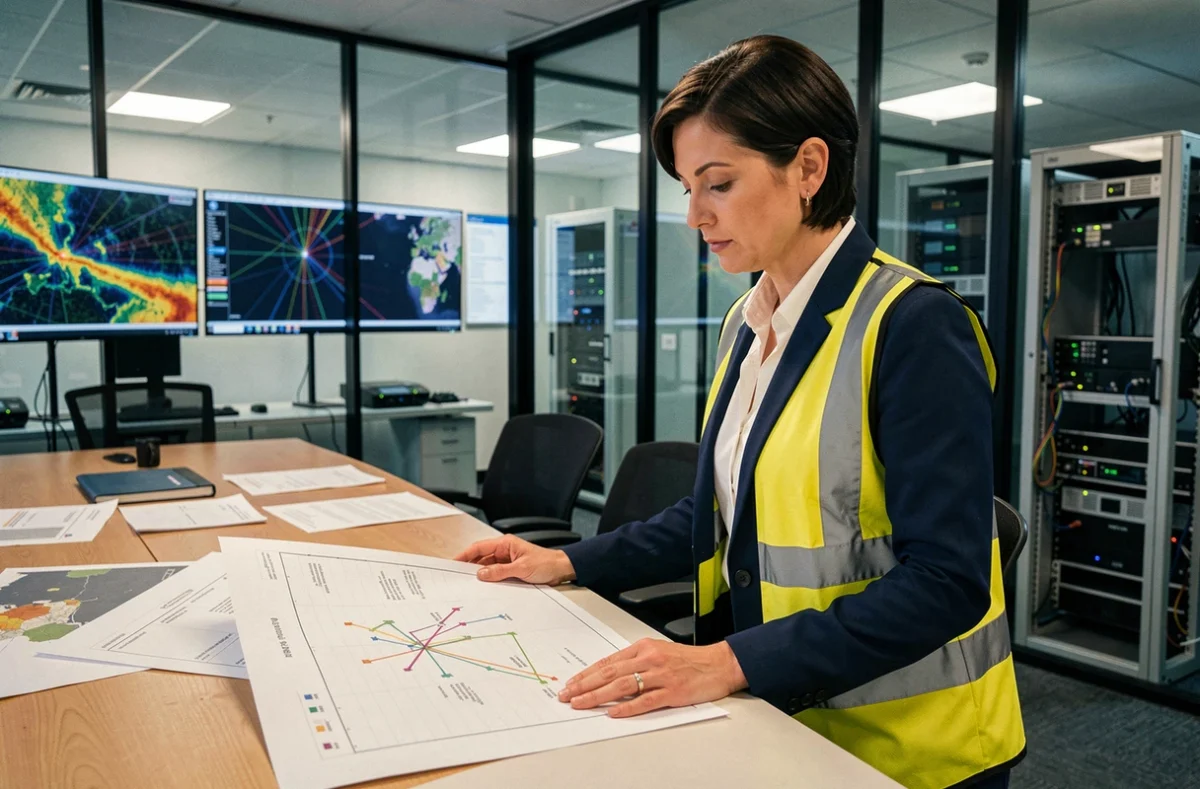
Sharing sites and frequencies reduces the unit cost per operator. In October 2026, Arcep authorized reciprocal frequency rentals in the 1800 MHz band, opening new possibilities for sharing among operators.
On the ground, sharing a mast between two operators divides civil engineering and maintenance costs. One finances the structure, the other pays rent and shares maintenance costs. This model is particularly relevant in rural areas, where the profitability of a site dedicated to a single operator is difficult to achieve.
The choices made at the deployment stage, between public, private, or hybrid networks, directly influence the possibility of sharing. A private enterprise network, for example, does not benefit from the same economies of scale as a site shared among national operators. Therefore, the initial sizing of the project must incorporate this variable from the specifications stage.
The underlying trend remains the densification of the 5G network on sites already equipped with 4G, while 2G and 3G gradually decline. Choosing an existing site rather than a new mast remains the most direct way to control the budget and shorten the commissioning timeline. The urban planning file, the sharing strategy, and the sizing of maintenance form the three concrete levers to negotiate before launching a project.