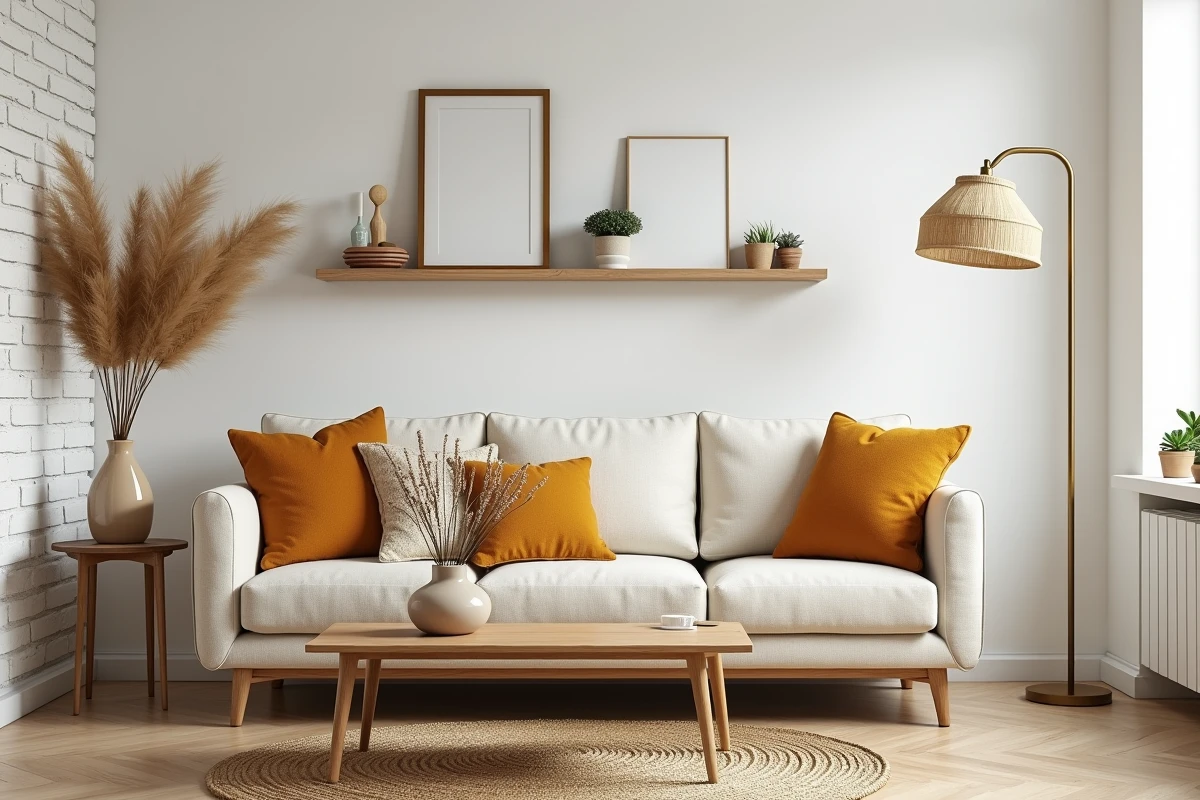
Choosing an interior decoration that reflects your tastes requires going beyond standardized catalogs. Rather than reproducing a style that has been seen and reviewed, the most effective approach is to assemble concrete elements (materials, colors, proportions) based on your actual space and daily habits. Here’s how to create an interior that is both trendy and personal, starting from often overlooked technical choices.
Traceability of decorative materials: a concrete selection criterion
Have you noticed that some manufacturers of flooring or decorative panels now display a “material passport”? This digital document details the origin, composition, recyclability, and reparability of the product. This practice comes from the professional building sector, driven by the European initiative Level(s) and the work of the Building As Material Banks (BAMB) project led by VITO.
For an individual, this passport changes the way to select a wall covering or flooring. A traceable material guarantees its composition and potential for reuse. This means you can check if the wood of your shelf comes from a sustainably managed forest, or if the paint on your wall contains volatile organic compounds beyond recommended thresholds.
This criterion is not reserved for heavy renovation projects. Even for a simple change of textile or the purchase of an accent piece of furniture, asking the manufacturer for the material sheet becomes a useful reflex. By browsing the decor section of Protect Habitation, you will find guidance to steer your choices towards products with documented provenance.

AI Simulation: test a decor style before buying anything
Recently, tools accessible to the general public allow you to simulate interior decoration from a simple photo of your room. Ikea Kreativ, RoomGPT, Planner 5D, or Homestyler operate on the same principle: you photograph your living room or kitchen, indicate a style and a budget, and the tool generates a visual proposal with an associated shopping list.
Testing a layout in simulation avoids costly mistakes. You can immediately see if a sage green sofa overwhelms a small space, or if a geometric patterned wallpaper clashes with a cement tile floor. This type of verification, once reserved for interior designers, is described by Fast Company as a democratization of AI-assisted design.
What simulation cannot replace
A digital rendering does not replicate the texture of a fabric or the natural light at different times. Before finalizing a wall color choice, always apply a physical sample to the relevant wall. Observe it in the morning and at the end of the day. Natural light radically changes the perception of a shade.
Similarly, a simulation tool does not take acoustics into account. A living room with a large polished concrete wall and a resin floor will reflect sound differently than a space dressed in textiles. Consider incorporating thick curtains, a rug, or felt wall panels if you seek auditory comfort as well as visual.
Ecodesign and modular furniture: what European regulation changes
The European Union Ecodesign Regulation pushes furniture manufacturers towards repairable, dismountable, and modular products. For consumers, this translates into a growing offer of furniture designed to evolve with your needs.
A telling example: fixed frame shelves with repositionable shelves. You buy a unique structure, then add or remove modules according to use (bookshelf, TV stand, entryway storage). Modular furniture adapts to every change of room or home.
This approach has a direct decorative advantage. Instead of replacing an entire piece of furniture when you change styles, you only replace the facades, handles, or legs. The cost is reduced, and the environmental footprint is too.
Materials to favor for durability
- Solid oak or beech, which withstand multiple cycles of sanding and finishing without losing their structure
- Powder-coated metal for bases, shock-resistant and recyclable at the end of life
- Oeko-Tex certified textiles for covers and cushions, ensuring the absence of harmful substances in contact with the skin
- Cork for wall coverings or floor underlays, naturally insulating and renewable
Colors and proportions: building a coherent palette room by room
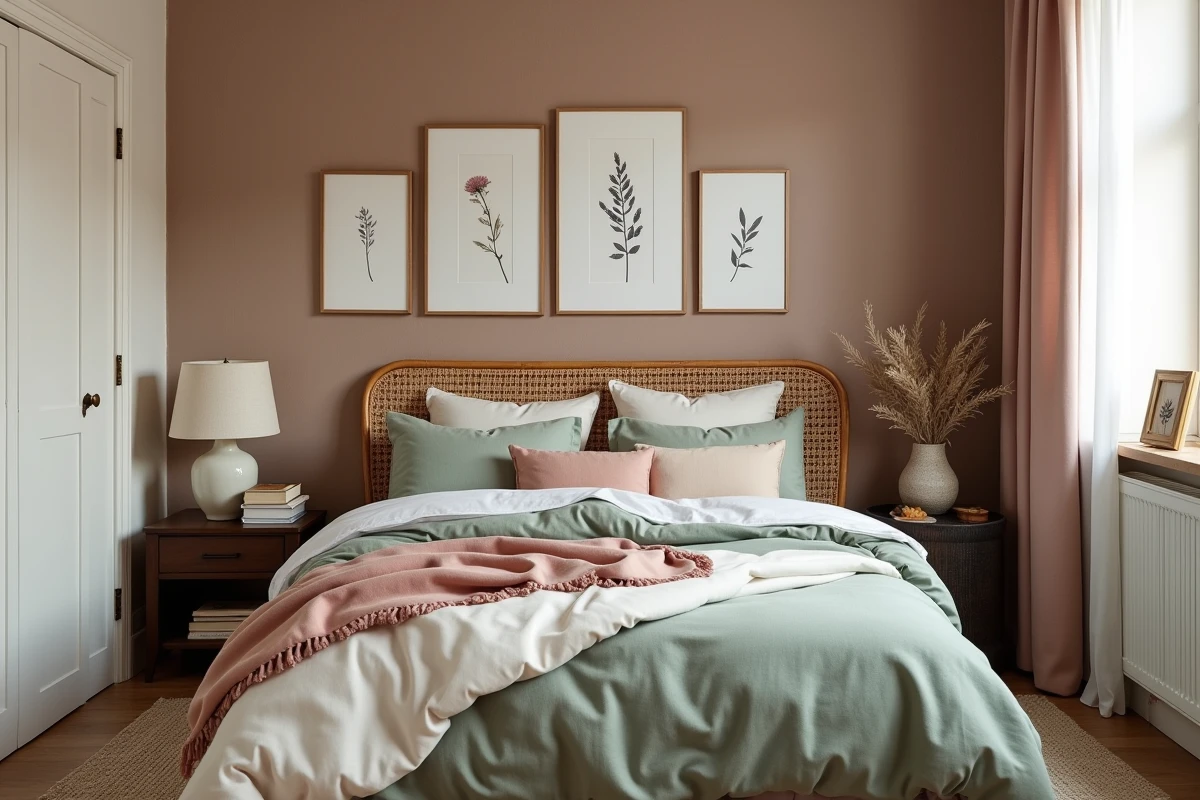
The current trend in interior decoration is not limited to a color of the year. It is based on a principle of proportion: a dominant shade occupies about two-thirds of the visible surfaces. The remaining third is divided between a secondary color and occasional accents.
Why does this ratio work? Because it creates a stable visual background. Your gaze naturally rests on the accents (a cushion, a vase, a frame) without being overwhelmed. If you reverse the proportions by multiplying bright colors over large surfaces, the space appears smaller and more chaotic.
Concrete application in a living room
Let’s take a medium-sized living room with a light wood wall and a parquet floor. The dominant is already set: the wood and its warm tones. The secondary color can be a sage green on the textiles (sofa, curtains). The accents are limited to two or three objects in a copper or terracotta tone.
Limiting accents to three objects per room avoids a cluttered effect. Each object should have a precise visual role: to draw the eye to a focal point (fireplace, window, niche). If you add a fourth accent without removing the first, you dilute the effect.
- Main wall: neutral shade or raw material (plaster, wood, stone)
- Textiles: a single color family, varied in two intensities (light for the sofa, deeper for the cushions)
- Decorative objects: a maximum of three, placed at different heights to guide the gaze vertically
The most successful interior decoration is one that is not immediately noticeable but provides a sense of balance as soon as you enter the room. Every choice of material, color, or furniture benefits from being tested in its real context, whether it’s a sample placed against the wall or a digital simulation on screen. It is this confrontation between the idea and the space that transforms inspiration into a truly personal interior.