French interior decoration is going through a period of aesthetic tensions. On one side, Scandinavian minimalism still dominates a large part of interiors. On the other hand, a wave of bright colors and bold patterns, dubbed “dopamine decor,” has been gaining ground since 2023-2024 according to several specialized media such as Elle Décoration and AD France.
Between these two poles, the question of harmonious decoration arises differently: how to reconcile contradictory desires in the same space without tipping into visual chaos or blandness?
Dopamine decor and visual coherence: a balance to build room by room
Dopamine decor relies on the positive emotional impact of color and contrasts. Vintage posters, pop knick-knacks, very colorful textiles: the goal is to provoke a joyful reaction upon entering a room. The trap is saturation.
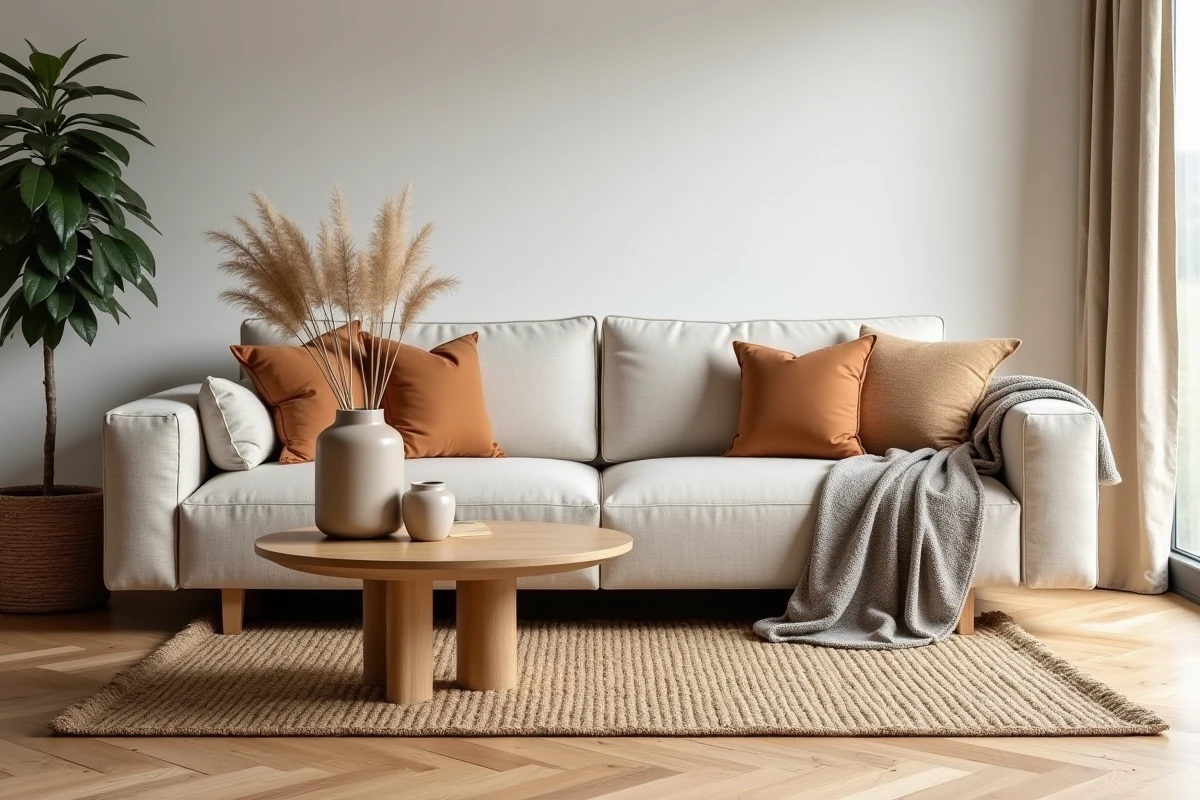
For a color-rich living room to remain readable, repeating the same shade in different elements (cushion, frame, vase) creates a common thread that the eye naturally follows. This principle of repeating shades through materials works equally well in a small apartment as in a spacious house.
On the other hand, multiplying colors without recurrence produces the opposite effect: a space that tires. Choosing a limited palette, three dominant colors per room for example, remains an effective safeguard even in a maximalist approach. Decorators documenting this trend emphasize this point: dopamine decor is not the absence of rules, but a controlled colorful framework.
Online catalogs like that of ambiance-et-deco.fr allow you to visualize color and material combinations before diving in, which reduces the risk of unfortunate combinations.
Materials and eco-responsibility: what circular decoration changes
Since 2022, consumer surveys have shown a continuous increase in so-called “circular” decoration. Second-hand furniture, refurbishing existing furniture (painting, new handles, new seating), choosing certified materials: this approach changes the way we think about the harmony of an interior.
A vintage piece does not have the same finish as a new piece. Its patina, imperfections, and unique texture create a contrast with contemporary elements. This contrast, far from harming coherence, can become the anchor point of an entire room, provided it is treated as a deliberate choice and not as a budgetary compromise.
Criteria to check for durable and coherent furniture
- FSC or PEFC certified wood guarantees responsible forest management, but also check the finish (varnish, oil, wax) which influences the final appearance and compatibility with your palette
- Low VOC paints preserve indoor air quality, a parameter often overlooked when repainting an old piece to integrate it into a new ensemble
- Oeko-Tex labeled textiles exclude harmful substances, which is particularly important for cushions, curtains, and covers in direct contact with the skin
Field feedback varies on the issue of “all second-hand.” Some decorators believe that mixing more than two stylistic eras in the same space requires a technical mastery that individuals often underestimate. Others consider that the embraced imperfection of a vintage piece brings more character than a catalog set.
Color palette for a harmonious interior: beyond beige and gray
The dominance of beige and gray in French interiors in recent years has produced a form of weariness documented by several decoration magazines. The return of saturated shades (terracotta, sage green, petrol blue) does not mean abandoning neutrals.
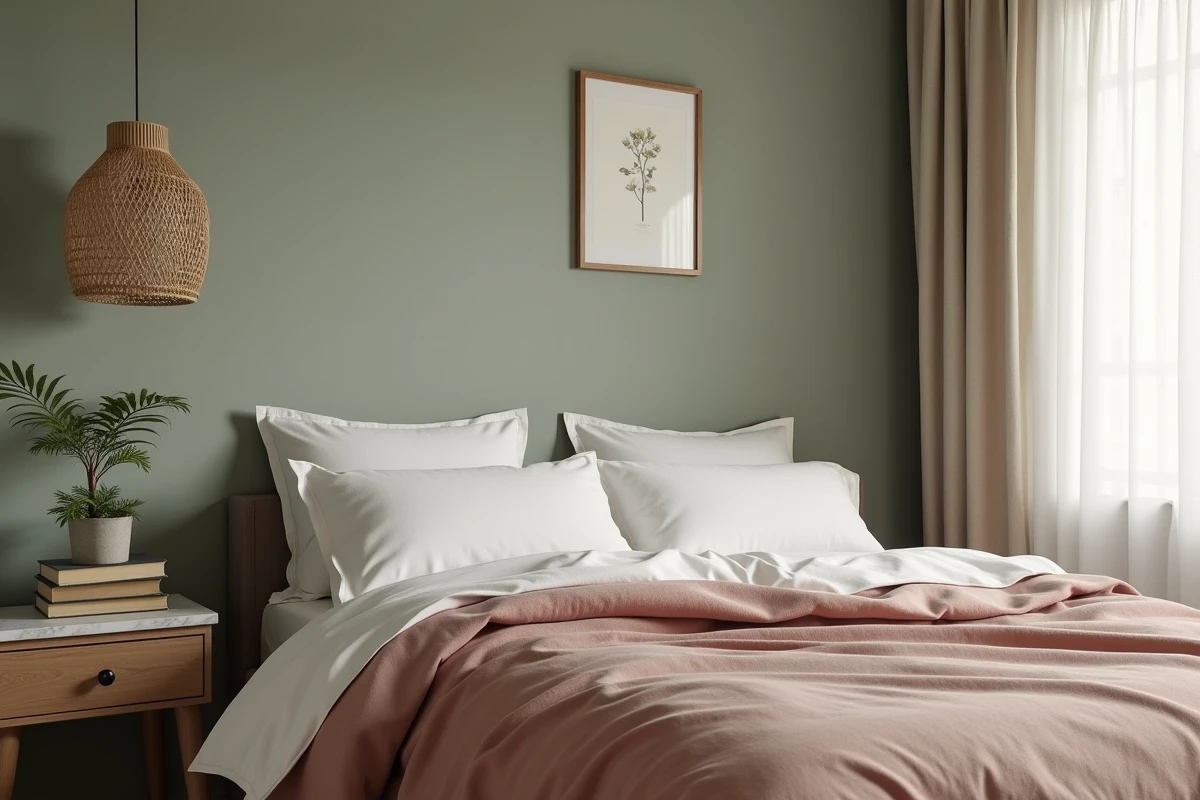
An approach that works in open spaces is to use a warm neutral as a wall base, then concentrate color on furniture and accessories. This method has a practical advantage: changing the dominant color does not require repainting, but simply replacing cushions, curtains, or decorative objects.
For closed rooms (bedroom, bathroom), an accent wall remains a relevant tool. A single wall painted in a strong shade is enough to transform the atmosphere without overwhelming the space. The choice of this shade benefits from being made in relation to the fixed elements of the room (floor, woodwork, sanitary fixtures) rather than based on a seasonal trend.
Natural light and color perception
The same color changes radically depending on the orientation of the room. A sage green appears warm and enveloping in a south-facing room, but can turn into a dull gray in a north-facing space with little light. Testing the color directly on the wall, with a sample observed at different times of the day, remains the only reliable method.
The available data does not allow for recommending a universal palette: each interior reacts differently depending on its brightness and volumes. Digital simulation tools provide an indication, but they rarely replicate the reality of natural light streaming through a window at 4 PM in winter.
Decor style and wall art: creating a focal point without overloading
Wall art, whether photographs, posters, or canvases, plays a structuring role in the decoration of a room. A well-chosen frame directs the gaze, organizes the space, and gives identity to a wall.
- A large format isolated on a neutral wall creates a powerful focal point that organizes the rest of the room around it
- An accumulation of frames of varying sizes (gallery wall) works if the frames share at least one common element: same material, same mat color, or same theme
- Vintage posters and prints, supported by the dopamine decor trend, bring personality but require careful framing to avoid slipping into a “student dorm” look
The height of hanging is part of common mistakes. Placing the center of a frame at eye level (about 1.50 m from the floor) remains the simplest and most effective rule for a harmonious result.
An interior that works does not result from a one-size-fits-all formula. Coherence arises from deliberate choices, whether colorful or sober, new or vintage, and their measured repetition from one room to another. Harmony in decoration relies more on the consistency of intentions than on the perfection of objects.