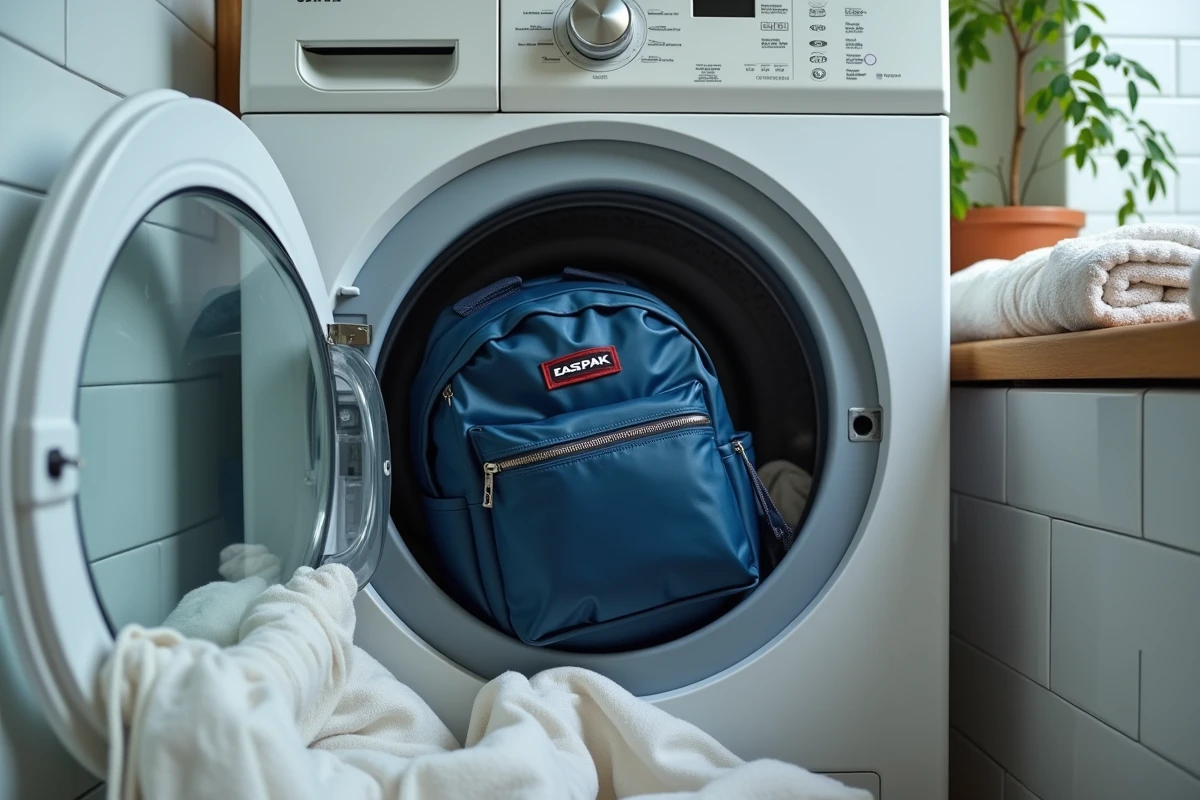
Washing an Eastpak bag in the machine may seem trivial, but this operation can have direct consequences on the product warranty. Eastpak conditions its limited warranty of up to 30 years on strict adherence to the care instructions on the label, and machine washing falls into the category of cleaning methods that the brand may deem inappropriate. Understanding the actual risks, depending on the model and type of dirt, allows for an informed decision.
Eastpak Warranty and Machine Washing: What is Covered and What is Not
Eastpak reserves the right to refuse any claims if the damage is related to cleaning that does not comply with the recommendations. The inner label of the bags prescribes cleaning with a damp sponge, not a machine cycle.
The warranty duration varies by model. Classic bags like the Padded Pak’r benefit from long coverage, while certain series (laptop bags, limited editions) are only covered for two years. The calculation is simple: losing a two-year warranty weighs less than canceling thirty years of coverage.
| Type of Eastpak Bag | Indicative Warranty Duration | Risk in Case of Machine Washing |
|---|---|---|
| Classic models (Padded Pak’r, Out of Office) | Up to 30 years | High: potential loss of long coverage |
| Laptop bags, special series | About 2 years | Moderate: short warranty, often already expired |
| Limited editions, collaborations | Variable | To be checked on a case-by-case basis on the label |
Experience shows that Eastpak regularly accepts repairs for zippers or seams under warranty. However, the brand systematically rejects claims related to wear, discoloration, or abrasion of the fabric, all damages that a machine wash can cause.
Before starting a cycle, checking the remaining warranty duration on your model allows for an informed decision. To delve deeper into the topic, knowing how to wash an Eastpak bag in the machine without compromising the fabric or finishes remains a preliminary step.

Sponge Cleaning or Machine Washing: The Concrete Differences on the Fabric
The Cordura fabric used on most Eastpak bags is highly resistant to abrasion in everyday use. A machine cycle, even a short one, subjects this fabric to different mechanical stresses: friction against the drum, twisting during spin-drying, prolonged immersion.
Cleaning with a damp sponge and mild soap (Marseille soap, for example) allows for targeting a stain without exposing the entire bag. The fabric does not undergo twisting or spinning, the zippers are not stressed, and the internal reinforcements maintain their rigidity.
What Machine Washing Can Alter
- The water-repellent surface coating, which protects the fabric from splashes, wears out faster due to the detergent and mechanical agitation.
- The foam reinforcements on the back and straps can deform or harden after spinning, even at low speed.
- The zippers, if not closed before washing, risk snagging on the drum and twisting.
A localized cleaning with a soft brush and cold water is sufficient in the vast majority of cases to eliminate stains and odors. Reserving the machine for situations where the bag is too dirty for manual cleaning limits premature wear.
Machine Settings to Minimize Damage to an Eastpak Bag
If machine washing remains your choice, certain settings significantly reduce risks. The delicate or wool program, at cold water and without spinning, constitutes the least aggressive framework.
Preparation Before the Cycle
Empty all pockets, close each zipper, and turn the bag inside out (fabric side out) to protect the visible side of the fabric from direct friction with the drum. Placing the bag in a pillowcase or a laundry net adds an extra mechanical barrier.
Choice of Detergent
A mild liquid detergent, without bleaching agents or chlorine, better preserves the color of the fabric. Powder detergents sometimes leave white residues in the seams and corners of the bag, which are difficult to rinse completely.
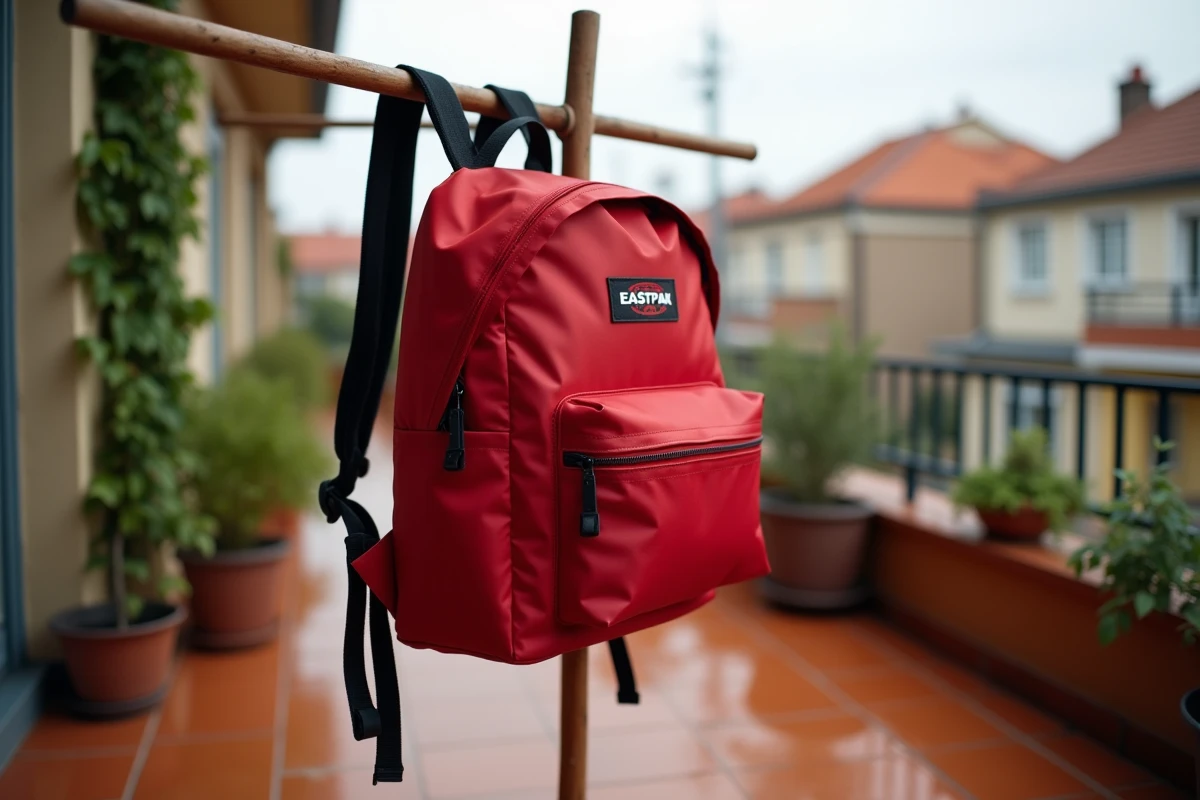
Never use a tumble dryer: heat deforms internal foams and can melt some plastic parts. Air drying, with the bag turned inside out and hung in the shade, remains the only option compatible with the product’s longevity.
Regular Maintenance: Extending Lifespan Without Resorting to the Machine
A bag regularly cleaned by hand almost never needs to go in the machine. A dry brush once a week removes dust and crumbs accumulated at the bottom of the pockets.
For localized stains, a damp cloth soaked in mild soap, rubbed in circular motions, treats most common dirt. Rinsing with a second damp cloth in clear water avoids soap rings.
Applying a water-repellent protective spray after each complete cleaning compensates for the natural wear of the original coating. This type of product, often sold for canvas shoes, also works on the fabric of backpacks and extends splash resistance.
The choice between machine and manual cleaning comes down to a trade-off: a one-time time-saving against a measurable degradation of the fabric, foams, and coating. For a bag still under long warranty, localized cleaning remains the most rational option. For a model whose warranty has expired and whose condition justifies a deep wash, a delicate cold cycle without spinning represents the least risky compromise.