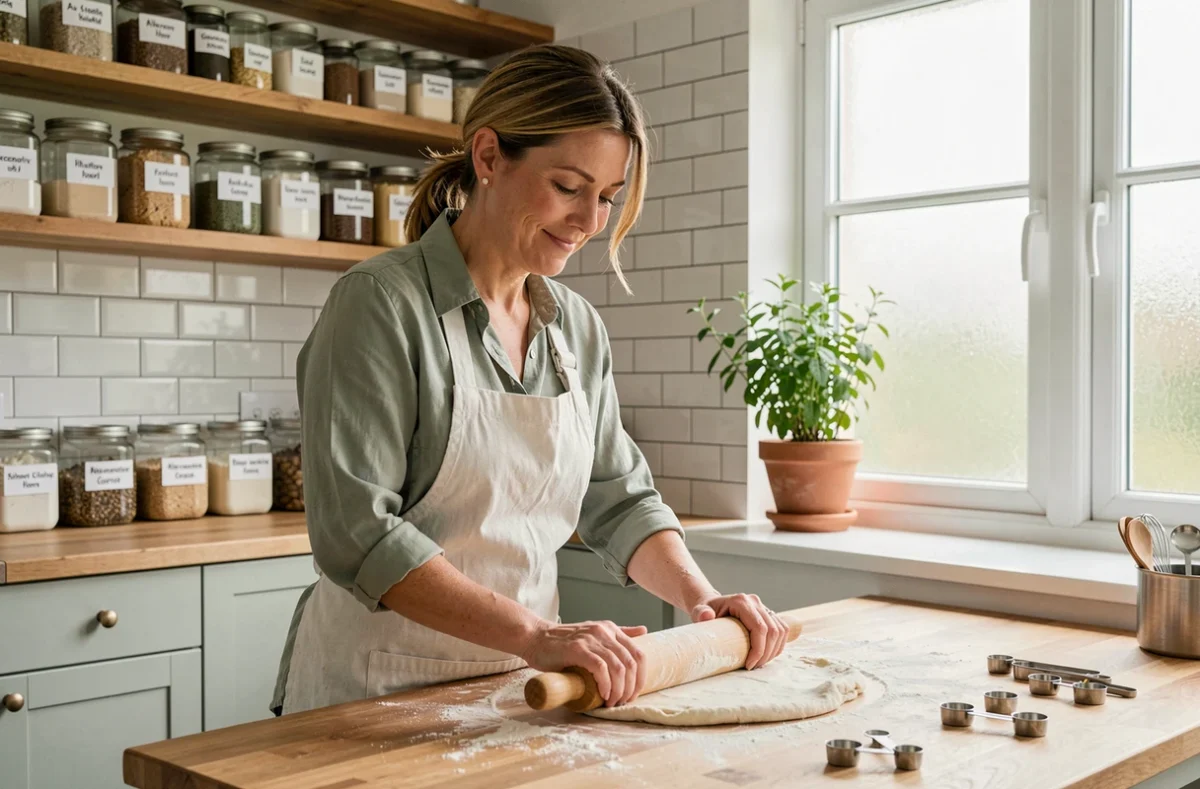
When one member of the household has coeliac disease and everyone else eats wheat without a second thought, the real challenge doesn’t start in the recipe book. It starts on the countertop, between the chopping board and the toaster. Everyday gluten-free cooking is first and foremost about organising the space so every meal is safe, then choosing ingredients that deliver on both taste and nutrition.
Cross-contamination in a mixed kitchen: what recipes can’t solve
You cook gluten-free pasta in the same pot used to drain wheat spaghetti five minutes earlier. The water has been changed and the pot rinsed. For someone with coeliac disease, rinsing isn’t enough.
Everyday habits can transfer invisible traces: reusing a colander, spreading butter with a knife that has touched regular bread, or toasting a slice in a shared toaster. EU regulations set the threshold for the “gluten-free” label at no more than 20 mg of gluten per kilogram of food. Just a few crumbs of regular bread in a fryer or on a chopping board can be enough to exceed this limit in a single serving.
The most reliable approach is to have dedicated utensils and areas. Use clear, practical cues to identify the gluten-free cooking setup:
- A dedicated toaster (or toaster bags for a shared toaster), a separate colander and a chopping board in a different colour, all stored separately.
- A cupboard or high shelf for gluten-free flours and grains, away from wheat flour bags that release dust when opened.
- A set order for cooking: prepare the gluten-free meal first, then the regular meal, to limit splashes and oversights.
This approach works even in a small kitchen. It requires a modest investment in equipment, but a real effort to build new habits. During the first few weeks, you’ll forget, correct yourself and adjust. A resource with ideas for suitable meals can make the transition easier: https://www.gourmandsansgluten.fr offers recipes designed for these everyday constraints.
Gluten-free flours: which ones to choose for each dish
Rice flour, cornflour and buckwheat flour cover most everyday uses. Beginners often reach for a ready-made flour blend. It works, but doesn’t help you understand what each ingredient does.
Combine two or three flours rather than using just one
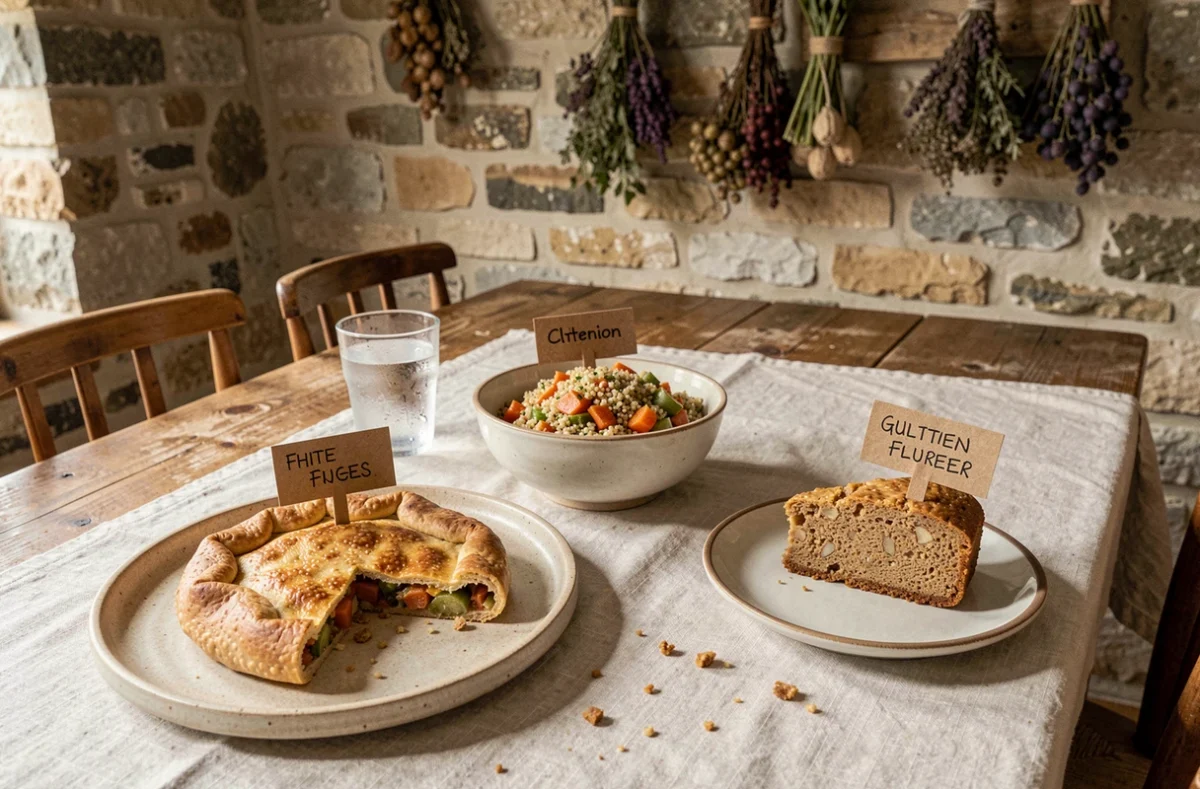
Rice flour on its own produces a dry, crumbly result. Combine it with a starch (corn or tapioca) for softness, and optionally add chickpea or chestnut flour for structure and flavour. The proportions vary depending on whether you’re making a cake, a tart crust or crêpes, because each flour absorbs water differently.
Weighing gluten-free flours to the exact gram makes a dramatic difference to the result. Unlike wheat flour, where an extra spoonful or one less often goes unnoticed, alternative flours leave little room for guesswork. A kitchen scale is the first worthwhile investment.
Nutritional value: not all flours are created equal
Data from ANSES’s Ciqual food composition table show significant differences between gluten-free flours, particularly in protein and fibre content. White rice flour is low in fibre. Buckwheat and chickpea flour provide more plant-based protein. Varying the flours helps prevent your diet from becoming a succession of refined carbohydrates—a common pitfall when you rely on industrial substitutes.
Everyday gluten-free recipes: three versatile staples
Rather than skimming through a catalogue of fourteen recipes, let’s focus on three dishes that cover breakfast, lunch and dinner and can be varied throughout the week.
Buckwheat galettes for a main meal
Buckwheat is naturally gluten-free. Galette batter needs just three ingredients: buckwheat flour, water and salt. Leave it to rest for an hour, then cook in a lightly oiled hot pan. Change up the filling each day (egg, cheese, ham, sautéed vegetables or mushrooms). Dinner is ready in about twenty minutes.
If you have coeliac disease, check that the buckwheat flour wasn’t milled in a mill that also processes wheat. The label should confirm that cross-contamination has been prevented, not just that the grain itself contains no gluten.
Gluten-free oat porridge for breakfast
Oats require special attention. They are often contaminated during growing or transport. Choose oats certified as “gluten-free”, or opt for rice, buckwheat or millet flakes.
Porridge takes just a few minutes to cook in milk or a plant-based drink. Add fresh fruit, nuts or seeds, and a drizzle of honey. It’s a filling breakfast that will keep you going until noon and doesn’t require any complicated flour blends.
Potato and vegetable gratin for dinner
Potatoes, rice and vegetables are naturally gluten-free. A potato gratin with béchamel made using cornflour instead of wheat flour makes a family meal everyone can enjoy, with no need to prepare a separate version. Cornflour thickens the sauce just as well, with a slightly silkier texture.
Cooking foods that are naturally gluten-free instead of using substitutes makes everyday meals simpler and keeps costs down. Rice, pulses, potatoes, eggs, fish and unprocessed meat don’t require any recipe adjustments.
Labels and regulated claims: what to check
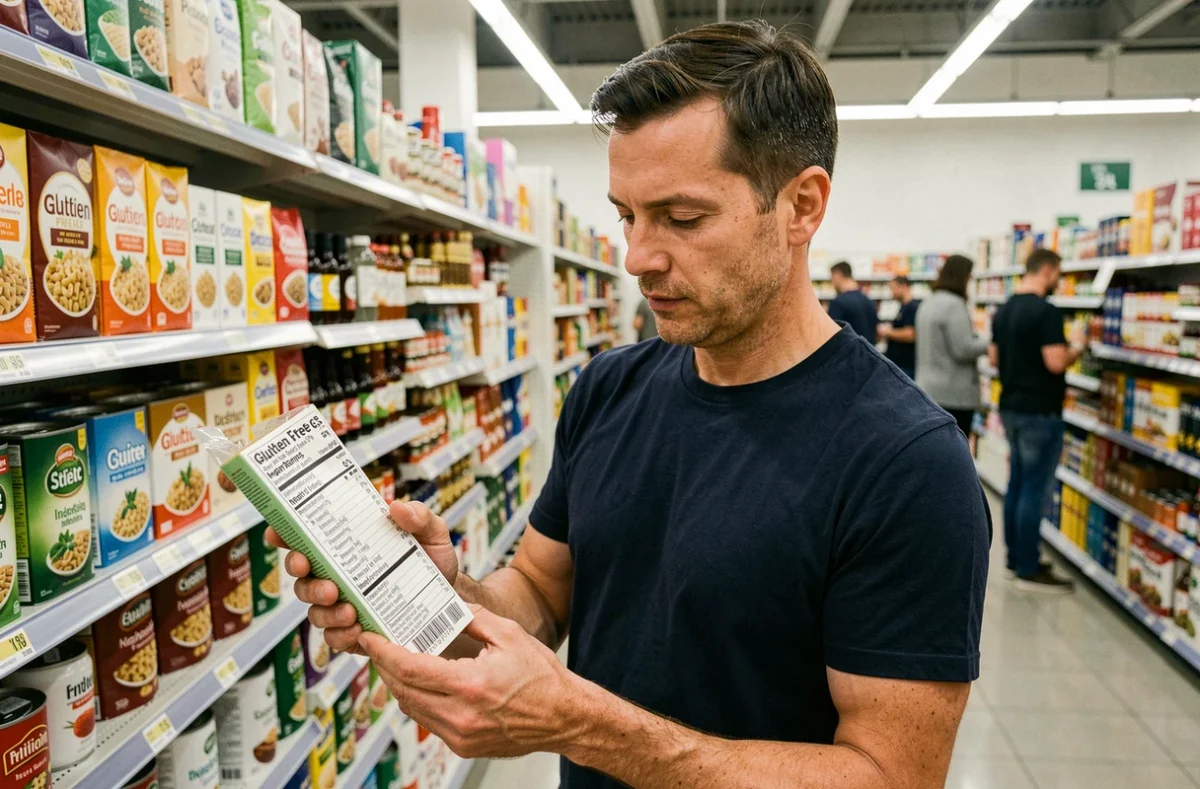
In the European Union, the “gluten-free” label means a maximum threshold of 20 mg/kg. “Very low gluten” refers to a higher threshold and isn’t suitable for everyone with coeliac disease. Read the packaging, not just the product name.
Some everyday ingredients contain gluten when you might not expect it: regular soy sauce (made with wheat), some baking powders, stock cubes and commercial mustards. Always check the ingredients list, even for products you’ve been buying for months, as manufacturers change their recipes.
Even “pure” oats must be labelled as having been produced or processed separately from gluten-containing cereals to be safe for someone with coeliac disease. This requirement is covered by EU regulations.
Getting into the habit of reading labels takes a few weeks. Once you’ve identified reliable brands and products, grocery shopping becomes quick again. The real time-saver in gluten-free cooking isn’t the recipes themselves, but the confidence you build in the ingredients you use every day.