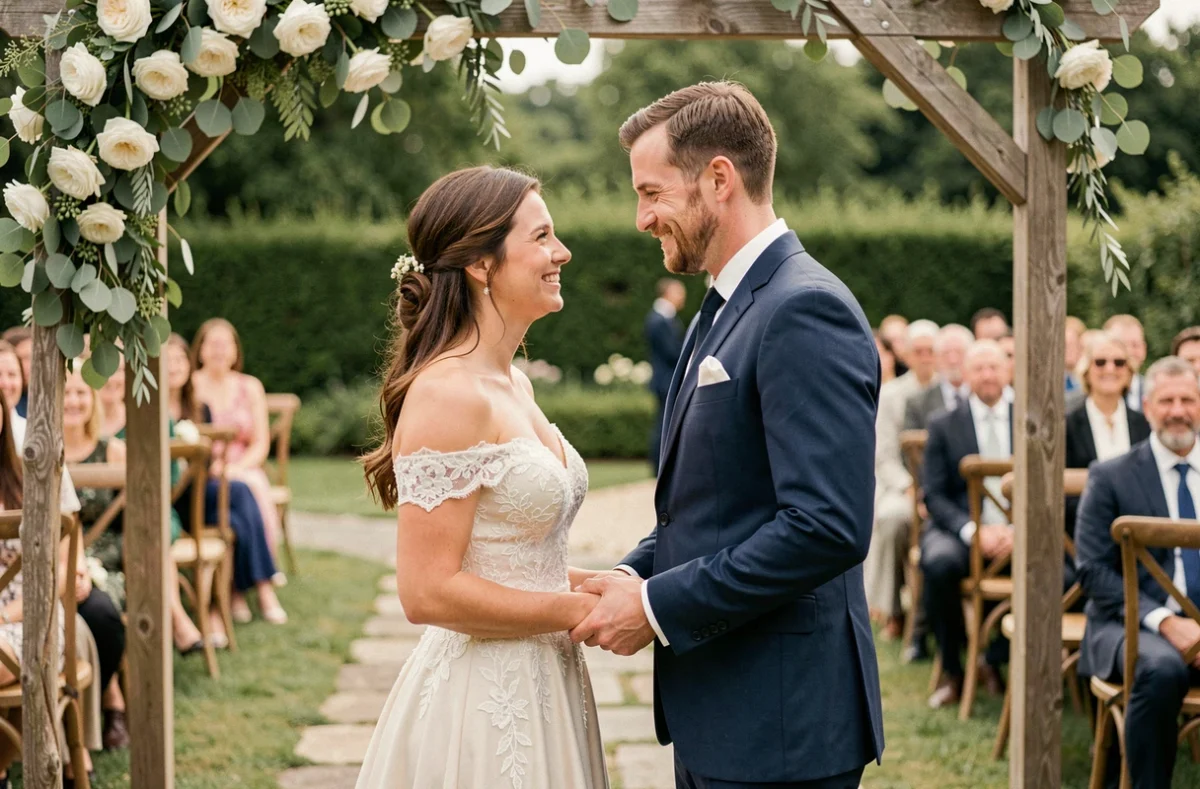
Planning a wedding involves dozens of decisions over several months. A survey reported by France 3 indicates that 51% of couples spend more than they planned. Planning for every expense, from the venue to guest transportation, helps avoid unpleasant surprises and ensures everyone has an enjoyable day, including guests with reduced mobility and those traveling from far away.
1. Set a wedding budget and stick to it
Before contacting any vendors, set a realistic overall budget. Include a contingency of at least ten percent: this reserve will cover last-minute extra costs without blowing your budget.
Rank your expenses by priority. The venue and catering often account for the largest share. Secondary items (floral decorations, premium invitations) can be adjusted if a major expense exceeds its estimate. For additional resources on budget allocation, see: https://www.mariage-conseils.fr.
A spreadsheet shared between both partners and updated whenever you sign a quote is still the most reliable way to track expenses in real time.
2. Choose the date and reception venue
Spring and early fall offer soft light and comfortable temperatures for older guests. Summer remains the most popular season, driving up prices and limiting availability.
Book the venue twelve to eighteen months in advance. Check that the site is accessible: ramps, door widths, and accessible restrooms. A country estate with an unpaved parking area can make things difficult for wheelchair users and guests wearing heels.
The civil ceremony must take place in a municipality with an established connection to one of the spouses. This legal requirement may influence your choice of reception venue if you want to hold the ceremony at the town hall and the reception at the same venue on the same day.
3. Create the guest list
The guest list determines your budget, venue size, and choice of caterer. Set a maximum number from the outset and stick to it, even under family pressure.
Ask guests early about dietary restrictions, mobility needs, and travel distance. Collecting this information through a simple online form lets you adapt the menu, arrange suitable seating, and organize shuttles if the venue is remote.
4. Choose your vendors: caterer, photographer, musician
Request at least three quotes for each service. Compare not only prices, but also cancellation terms, travel fees, and extra charges for extending the evening.
Meet each vendor in person before signing. A face-to-face conversation reveals how responsive and attentive they are, and whether they share your vision. For the caterer, insist on a tasting: a menu on paper says nothing about the quality of the food.
Secure your priority vendors as soon as the venue is confirmed. In-demand photographers and musicians book up more than a year in advance.
5. Plan the decorations and atmosphere
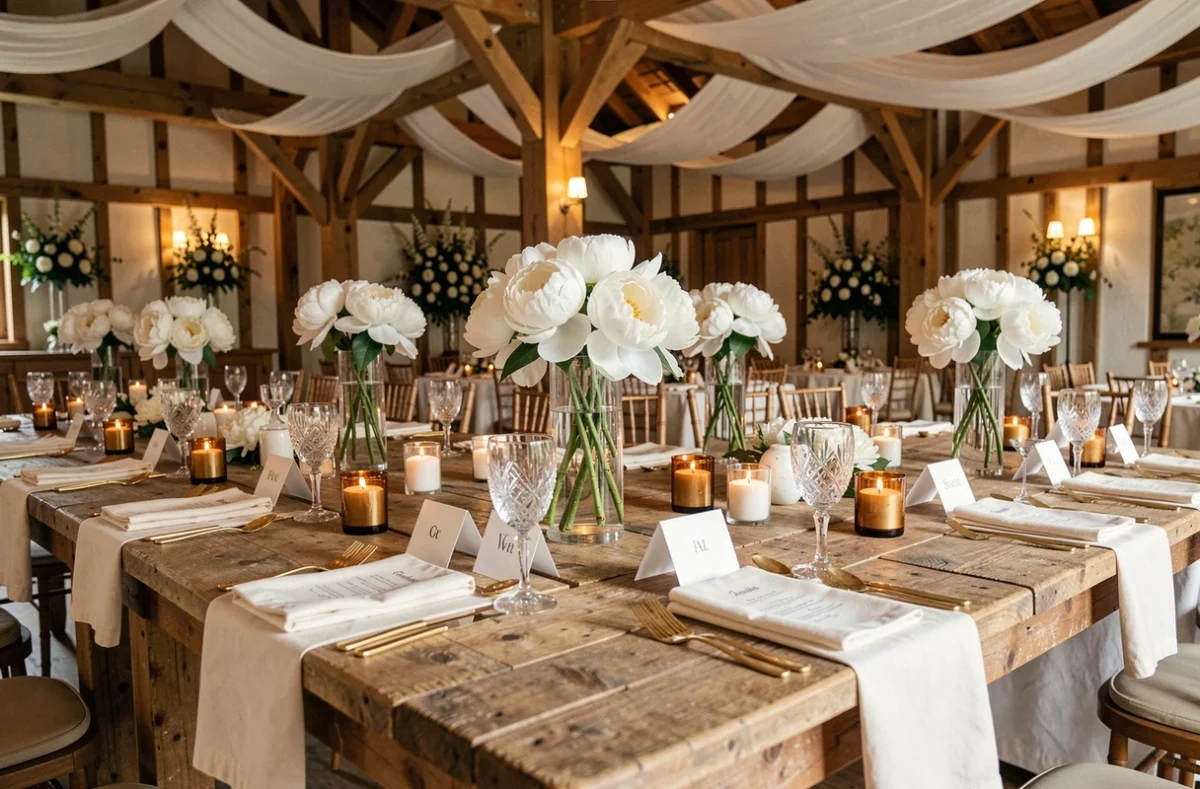
Choose a visual theme (color palette, materials, floral style) rather than a rigid concept. A visual theme guides your choices without locking you into an expensive setup.
Choose seasonal flowers: they cost less and last longer. If your wedding is in the fall, dahlias and chrysanthemums make excellent alternatives to imported peonies.
Give lighting as much thought as your table decorations. String lights or candles can completely transform a room without stretching your budget.
6. Plan the ceremony and schedule
Break the day into time slots, leaving fifteen to twenty minutes between each part. Delays can quickly add up: group photos, travel between the town hall and reception venue, and the cocktail hour.
If the civil and religious ceremonies take place on the same day, decide who will bring the civil marriage certificate to the religious officiant. Some dioceses (Nanterre, Le Mans) require this document before the service begins.
Appoint someone you trust as your day-of coordinator. Their role is to remind vendors of the schedule, handle unexpected issues, and let you enjoy the day.
7. Take care of the administrative and legal details
Submit your marriage application to the town hall several weeks before the wedding date. The banns are posted for at least ten days, and the ceremony must take place within one year of the end of that period.
Documents to gather:
- Birth certificate issued within the last three months for each spouse
- Proof of address and valid ID
- List of witnesses with their full contact details
- Notary’s certificate if a marriage contract has been drawn up
Make an appointment with your chosen town hall early: some municipalities have limited time slots, especially during peak season.
8. Coordinate outfits and hairstyling
Order your dress or suit at least six months before the wedding. Alterations usually require two to three fittings over several weeks.
Book your hairstylist and makeup artist for the wedding day at the same time as your other vendors. Schedule a hair and makeup trial at least a month beforehand to see how everything looks in real-life conditions, with your veil or planned accessories.
9. Arrange transportation and accommodation for guests
This is one of the most overlooked details, yet it has a major impact on your guests’ comfort. Here’s what to plan for:
- Shuttles between the train station or hotel and the reception venue, especially if it’s in a rural area
- A block of rooms at one or two nearby hotels, negotiated at a group rate
- Detailed directions sent with the invitation, including carpooling options
A venue with public transportation access makes it easier for guests without a car to attend, particularly older guests and those traveling from far away. Check the departure time of the last train or bus if the celebration runs late.
10. Do a final check before the wedding day
A week beforehand, contact each vendor to confirm timings, guest numbers, and delivery arrangements. Check the weather and prepare a backup plan if the ceremony or cocktail hour is outdoors.
Put together an emergency kit: safety pins, white thread, painkillers, a phone charger, and tissues. Give the kit to your coordinator so you don’t have to think about it on the morning of the wedding.
Even the best-planned wedding leaves room for the unexpected. A solid schedule isn’t about achieving perfection; it’s about peace of mind. Once every logistical detail is in place, all that’s left is to enjoy the day with the people you love.