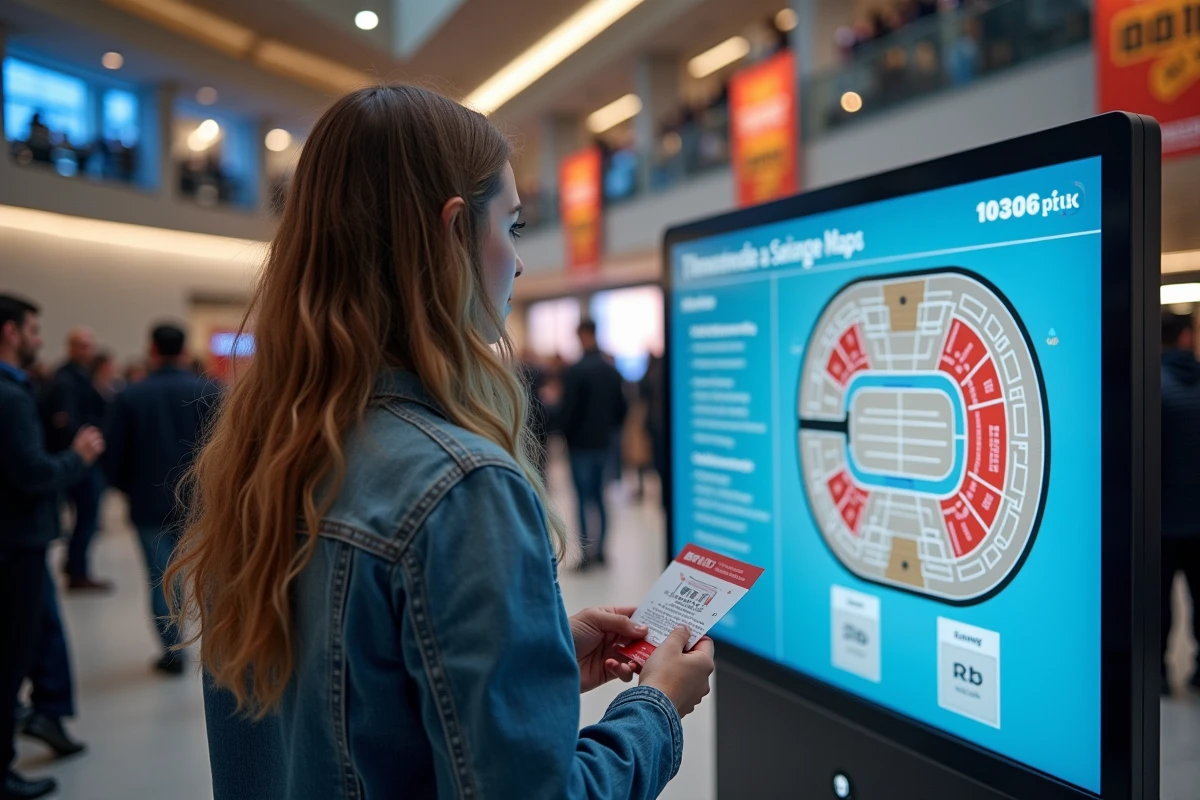
When booking a seat at the Zénith de Nantes, the seat number on the ticket doesn’t say much. Block B, row 12, seat 8: without a visual reference, you’re buying blind. The good news is that several tools today allow you to visualize the venue even before you’ve completed the payment.
Interactive seating plans: the reflex before purchasing at the Zénith de Nantes
The most direct way to know where you will be sitting is through the ticketing platforms themselves. Fnac Spectacles, for example, offers a seating plan that allows you to choose your seat placement. You open the plan to get an overview, then click directly on the available seats.
This feature is also available with other resellers like Francebillet or Seetickets. The main advantage: you can test several blocks and categories before confirming. You can visually compare a side tier seat with a front row seat without leaving the purchase page. If you want to visualize your seat at the Zénith de Nantes reliably, these interactive plans remain the most concrete option because they reflect the actual configuration of the scheduled show.
A detail that changes everything: the displayed plan varies from concert to concert. The same event can open the standing area, close certain tiers, or reconfigure the stage. The interactive plan adapts to each show, making it more reliable than a generic static plan of the venue.

Venue configuration at the Zénith based on the type of show
You see different things depending on whether you are attending a rock concert with a standing area or a seated show with choristers on stage. The Zénith de Nantes Métropole hosts very different configurations, and this is a point that most guides forget to mention.
Standing area, seated area, partial tiers
For a rock or electro concert (like Placebo, Fat Freddy’s Drop, or an L2B night), the standing area is often used. The line of sight from the front rows of the stands can then be partially blocked by the mass of standing spectators below. In this case, the elevated rows of the stands often offer a better angle than the first rows close to the standing area.
For a show like “Toujours Vivant” with its 500 choristers on stage, the configuration changes radically. The stage expands, the standing area can be seated or reduced. The side seats, often overlooked, become interesting because they allow you to see the entire stage setup.
What this means for seat selection
Before selecting a block, check the nature of the show:
- Standing concert with a pit: prioritize the higher stands, facing the stage, to maintain an unobstructed view above the crowd
- Seated show or wide scenography: the side seats and the front rows of the stands regain value
- Variety tour or solo artist (Vianney, Vanessa Paradis, SAEZ): category 1 facing the stage remains the safest choice, but feedback varies on this point depending on the exact height of the row
Online visualization tools for the Zénith de Nantes seating plan
Outside of ticketing platforms, a few specialized sites try to provide views from the seats. The concept “a view from my seat” exists for many venues in France, including the Zénith de Nantes. The principle: spectators share photos taken from their seats during past concerts.
These photos provide a realistic glimpse of the distance to the stage and the angle of view. They usefully complement the 2D schematic plan offered by ticketing platforms. You can quickly spot if a high block offers a pleasant overhead view or if the stage seems too far away.
The limitation of these tools: not all seats are covered, and the stage configuration changes from one show to another. A photo taken during a rock concert with giant screens does not correspond to the experience of a one-man show with minimalist lighting.

Stands, categories, and seating at the Zénith: concrete references
The official site of the Zénith Nantes Métropole offers a dedicated page for seating and early access. It provides basic information on categories (pit, category 1, category 2) and priority access rules for certain tickets.
Here are some practical references to keep in mind:
- The stands at the Zénith are organized into blocks identified by letters. A central block facing the stage is not as advantageous as a side block, even at the same price category
- Early access allows entry before the general opening and placement in the front rows of the standing area for standing concerts
- Accessible seats for PMR/PSH have dedicated locations with adapted visibility, available by reservation with the venue
- An e-ticket can be scanned on a smartphone, avoiding the need for a paper printout, but ensure enough battery for scanning at the entrance
The choice between upper and lower stands also depends on the type of music. For a concert where sound and atmosphere matter more than visual proximity, the upper stands offer more homogeneous acoustics. For an artist you want to see up close, the pit or the first rows of category 1 remain the priority.
The best way to avoid regretting your seat is to cross-check at least two sources: the interactive seating plan from the ticketing platform at the time of purchase and, if possible, a photo taken from a nearby seat during a previous show. No static plan will replace this double-checking, especially in a modular venue like the Zénith de Nantes Métropole.