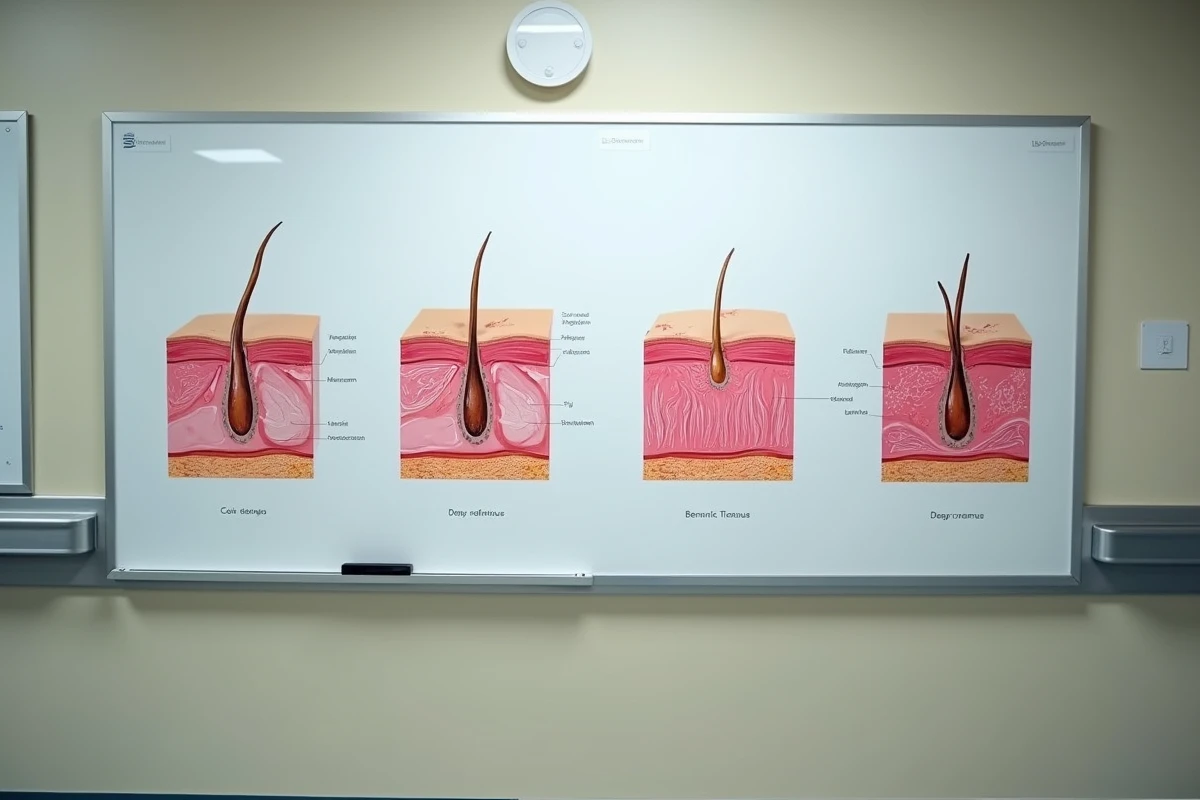
A stage 1 pressure ulcer does not always look like what is shown in textbooks. On dark skin, the characteristic redness may be invisible, replaced by a change in temperature or texture that can only be detected by touch. This clinical reality makes visual diagnosis insufficient from the first stage, and assessment errors continue up to stage 4.
Visual diagnosis on dark skin: the limits that guides ignore
The NPUAP/EPUAP classification has historically relied on descriptions calibrated for light skin. On phototypes V and VI, stage 1 erythema is often not visible to the naked eye. Instead, we observe a purplish, bluish area, or simply a darker patch than the surrounding skin, without the expected redness.
The 2025 recommendations from NPUAP-EPUAP-PPPIA reposition three criteria as priorities for dark skin: local warmth (or conversely, suspicious cooling), tissue consistency (induration or softening under the fingertips), and pain reported by the patient. Color alone is no longer sufficient to confirm or exclude stage 1.
This point has direct consequences for the interpretation of photos of pressure ulcers from stage 1 to 4: an image taken on light skin does not serve as a transposable reference. A caregiver comparing a suspicious area on dark skin to a stage 1 image on light skin risks underestimating the lesion by one or two stages.

False positives at stage 1: moisture dermatitis and friction erythema
Not every persistent redness in the buttock area is a pressure ulcer. Two differential diagnoses frequently pose problems.
Incontinence-associated dermatitis (IAD) produces diffuse erythema, often bilateral, localized in areas of contact with urine or feces. Pressure lesions, on the other hand, concentrate on a bony prominence (sacrum, ischium, trochanter). If the redness extends widely beyond the pressure area and reaches the inguinal folds, we are likely dealing with IAD, not stage 1.
Friction erythema related to sliding in bed also mimics stage 1. The difference lies in the shape: an early pressure ulcer creates a localized area corresponding to the pressure surface, while a friction lesion stretches in a band along the shear movement.
- Localized area, centered on a bony prominence, that does not blanch under digital pressure: suspect stage 1 pressure ulcer
- Diffuse, bilateral redness extending into skin folds, associated with maceration: suggest incontinence dermatitis
- Banded or streaked lesion, painful, appearing after repositioning: suggest friction or shear lesion
- Purplish or indurated area on dark skin without visible redness: do not exclude stage 1 and reassess in 24 hours
Pressure ulcer from stage 2 to stage 3: what images do not show
Stage 2 is characterized by partial loss of skin thickness. Clinically, we see a blister (serous or hemorrhagic) or a superficial abrasion of the dermis. In photographs, this lesion may appear benign, just a simple skin detachment.
The transition to stage 3 marks a break: the loss of substance reaches the hypodermis, and the wound deepens. Subcutaneous fat tissue may be visible at the bottom of the cavity. In the buttock area, the thickness of adipose tissue varies significantly from patient to patient, making the apparent depth misleading.
A stage 3 in a cachectic patient will appear deeper than a stage 3 in a patient with significant fat mass, even though the tissue severity may be identical.

We recommend never assessing the depth of a pressure ulcer solely from a photo. Gentle exploration with a sterile probe remains the only reliable way to measure actual depth and detect an undermined track (tunneling) that is invisible on the surface.
The trap of dry necrosis
A black, dry, and adherent plaque on the sacrum or ischium masks the true depth of the lesion. As long as the ulcer is not debrided, the stage cannot be determined. Classifications then refer to an “undetermined” or “unclassifiable” stage. Photographing this plaque and labeling it as stage 3 or 4 based on its appearance is a common error in care records.
Stage 4 pressure ulcer: beyond the deep wound
Stage 4 exposes deep structures: fascia, muscle, tendon, and even bone. In the buttock area, the sacrum is the most frequently affected bony structure. The 2025 recommendations emphasize the high risk of osteitis and osteomyelitis at this stage, a complication that radically changes management.
Visually, stage 4 at the sacrum appears as a wide cavity with irregular edges, sometimes with fistulous tracts. The presence of moist necrotic tissue (yellowish fibrin, gray necrosis) is common. Foul odor indicates significant bacterial colonization, but is not sufficient to diagnose infection: only a deep bacteriological sample can provide a definitive answer.
- Visible or palpable bone exposure at the bottom of the wound: confirms stage 4 and necessitates an osteitis assessment
- Undermined tracks detected with a probe, extending beyond the visible edges of the wound: common at the sacrum and ischium
- Abundant and foul-smelling exudate: requires a bacteriological sample before any antibiotic therapy
Buttock pressure areas and risk of recurrence
The ischium and sacrum account for the majority of pressure ulcers, but the distribution of risk changes depending on position. In the supine position, maximum pressure is exerted on the sacrum. In a sitting position (wheelchair), it is the ischial tuberosities that bear the weight. A patient alternating between bed and chair exposes two distinct areas, necessitating a repositioning protocol that covers both situations.
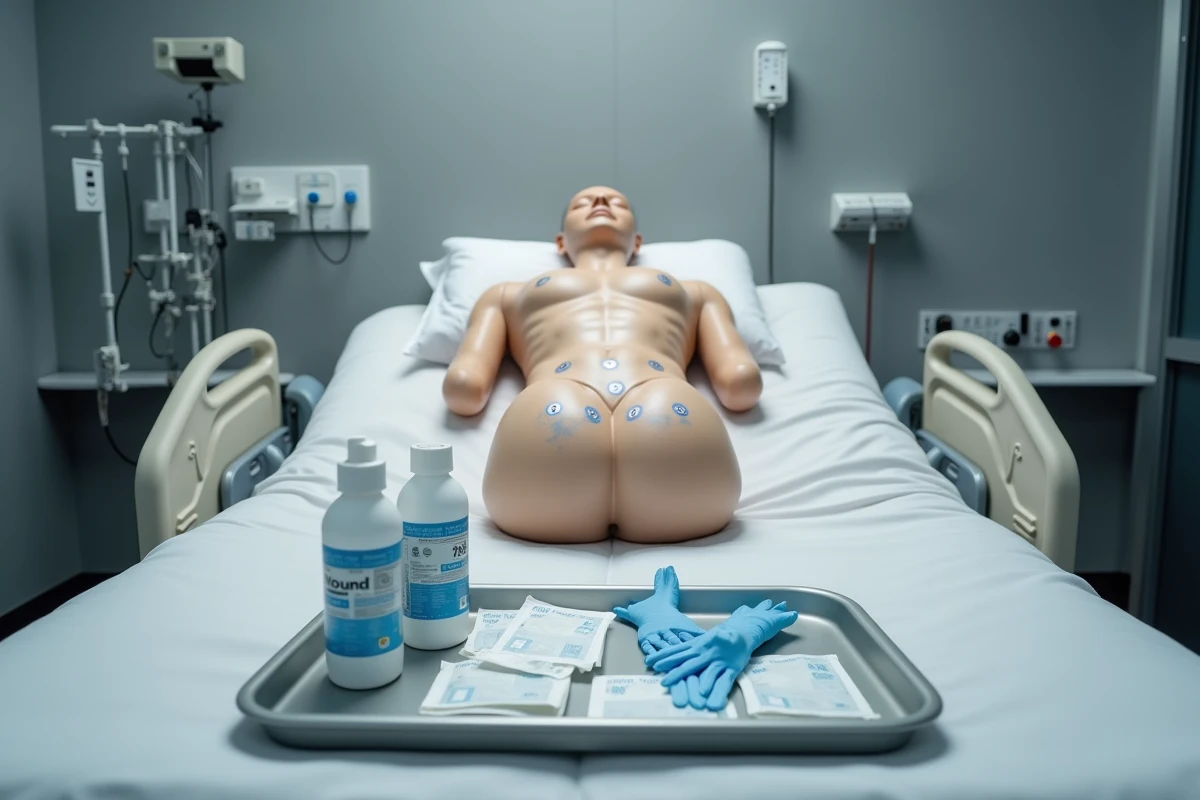
Recurrence at the same site remains the most frequent scenario. Scar tissue, less vascularized and less elastic than healthy skin, is less resistant to pressure. A healed pressure ulcer at the sacrum warrants prolonged monitoring of that area, even months after complete healing.
Visual assessment by stage remains a communication tool among caregivers, not a standalone diagnostic tool. Without palpation, without consideration of phototype, and without exploration of actual depth, a photo of a pressure ulcer provides partial information that may lead to inappropriate decision-making.