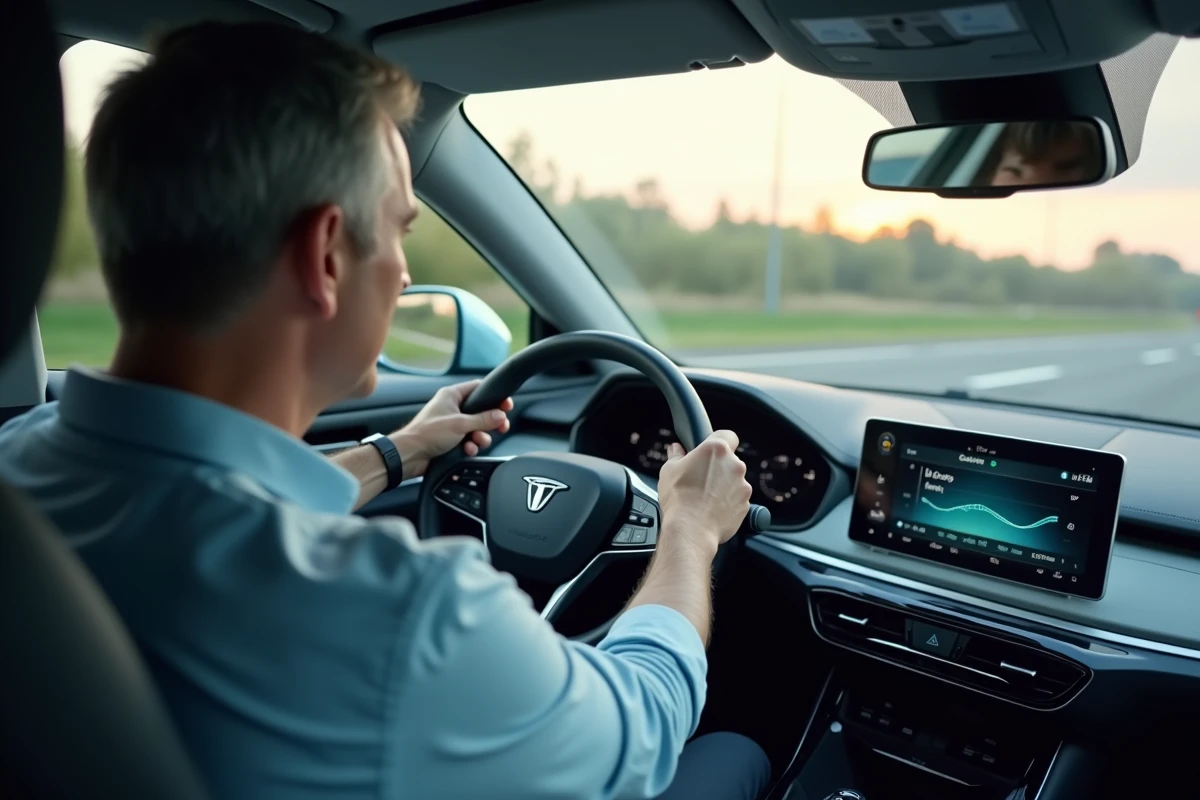
On the highway, a plug-in hybrid vehicle consumes significantly more than in the city. The battery drains quickly, the internal combustion engine takes over sooner than expected, and the consumption displayed on the dashboard diverges from the promises of the WLTP cycle. Understanding why, and especially measuring the discrepancies based on speed and driving mode, allows one to regain control over their energy bill.
Hybrid consumption on the highway: what tests show with an empty battery
European regulations now require manufacturers to communicate the “empty battery” consumption, in addition to the mixed consumption. This value is much more representative of highway use, where the electric reserve diminishes within a few dozen kilometers.
Independent tests conducted by magazines like AutoBild and What Car? on several PHEV models confirm a clear finding: beyond stabilized speeds of 110-120 km/h, electric range is halved or more compared to the mixed urban and suburban cycle. The internal combustion engine then operates almost continuously, even when the EV mode is selected.
| Driving Situation | Internal Combustion Engine Demand | Electric Range |
|---|---|---|
| City and suburban (mixed cycle) | Low to moderate | Close to the announced WLTP value |
| Highway at stabilized 110 km/h | Moderate to frequent | Significantly reduced |
| Highway at stabilized 130 km/h | Almost permanent | Halved or more vs mixed cycle |
This table summarizes what general hybrid driving guides rarely mention with such precision. The chosen stabilized speed on the highway is the factor that weighs most heavily on the actual consumption of a PHEV.
To delve deeper into the strategies suited to this context, several resources detail the mechanisms at play, such as the Pendant ce Temps site for hybrid driving, which addresses the specifics of highway driving.
Stabilized speed and EV mode: where is the energy efficiency threshold
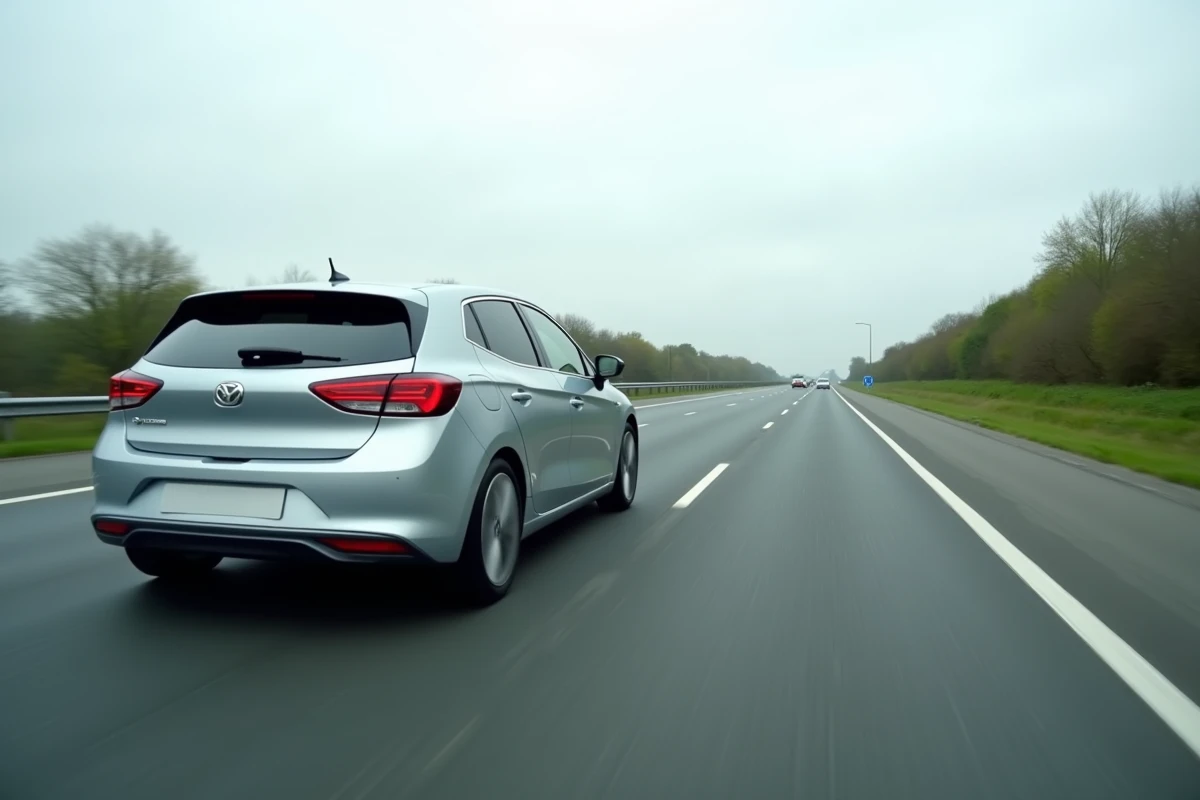
Aerodynamic resistance increases with the square of speed. Moving from 110 to 130 km/h results in only a modest time gain over a journey of several hundred kilometers, but the energy demand rises disproportionately.
On a plug-in hybrid, this increase translates into an earlier switch to the combustion engine. The EV mode, designed to operate within a limited power range, can no longer solely meet the driving demand. Driving slightly below the maximum speed limit significantly reduces consumption, a discrepancy that the tests by AutoBild and What Car? measured across several models.
Why eco mode is not enough at high speeds
Eco mode restricts acceleration and limits air conditioning, but it does not change the laws of physics. At 130 km/h, the power required to maintain speed often exceeds the capacity of the electric motor alone, regardless of the selected mode.
Selecting eco mode remains useful for smoothing power demands, but it is the cruising speed that determines the share of the combustion engine. A driver traveling at 110 km/h in normal mode will consume less than a driver at 130 km/h in eco mode.
Regenerative braking on the highway: an underutilized lever
In the city, regenerative braking recovers a significant portion of kinetic energy. On the highway, deceleration phases are rarer, which mechanically reduces the recovery potential. The lever still exists, provided it is used differently.
- Anticipate slowdowns (toll booths, construction zones, exits) by easing off the accelerator several hundred meters in advance, allowing the regenerative system to brake gradually rather than using the brake pedal at the last moment
- Utilize downhill slopes by letting the vehicle decelerate naturally, which partially recharges the battery without consuming fuel
- Set the regeneration level to maximum when the vehicle allows, to capture more energy with each lift of the foot
Every anticipated deceleration phase charges the battery and delays the moment when the combustion engine takes over alone. On a long highway trip, these cumulative micro-recharges make a measurable difference.
Battery management on long trips: recharge, preserve, or drain
A dilemma arises on long highway journeys: should one drain the battery from the start to drive electrically for as long as possible, or save it for urban sections upon arrival?
Battery strategy based on trip profile
The answer depends on the topography and traffic conditions. Using electric charge on the highway, where consumption is highest, amounts to wasting a resource that would be much more cost-effective in urban or suburban areas.
- On a mixed trip (highway then city), conserving charge for the urban portion reduces overall consumption, as the electric motor is most efficient at low speeds
- On a 100% highway trip, using the battery at the beginning of the journey and then driving with the combustion engine remains the only option, but maintaining a moderate speed limits overconsumption
- Some models offer a “charge hold” mode that preserves battery level for later use, a setting often wiser than the forced EV mode on the highway
The “empty battery” consumption communicated by manufacturers, now mandatory under the WLTP protocol, provides a realistic basis for estimating what the highway portion of a trip will cost. Checking this value before a long journey avoids unpleasant surprises upon returning from vacation.
The most accessible gain on the highway does not come from a miracle driving mode or a hidden setting. It comes from a simple choice: reducing cruising speed by a few kilometers per hour and reserving the battery for sections where the electric motor operates at full efficiency.