Let’s dive into the captivating world of merchandising, a crucial business strategy that has proven effective in amplifying sales. This discipline, which some refer to as an art, lies at the intersection of psychology, design, and marketing strategy. Its aim is to optimize the attractiveness of products in order to positively influence customers’ buying behavior. Revealing its secrets means uncovering a set of skillful techniques that blend optimal layout, product staging, and user experience optimization. A true dive into the behind-the-scenes of retail, where every detail matters.
Merchandising: A Revisited Ancestral Practice
Under the expression ‘the four types of merchandising’, we distinguish strategic merchandising, organizational merchandising, atmospheric merchandising, and finally digital merchandising.
The first type, also known as management or strategic merchandising, concerns the overall store policy: selection of products to sell (assortment), pricing (pricing strategy), or even supplier selection. It is directly related to management to determine the major commercial and economic directions.
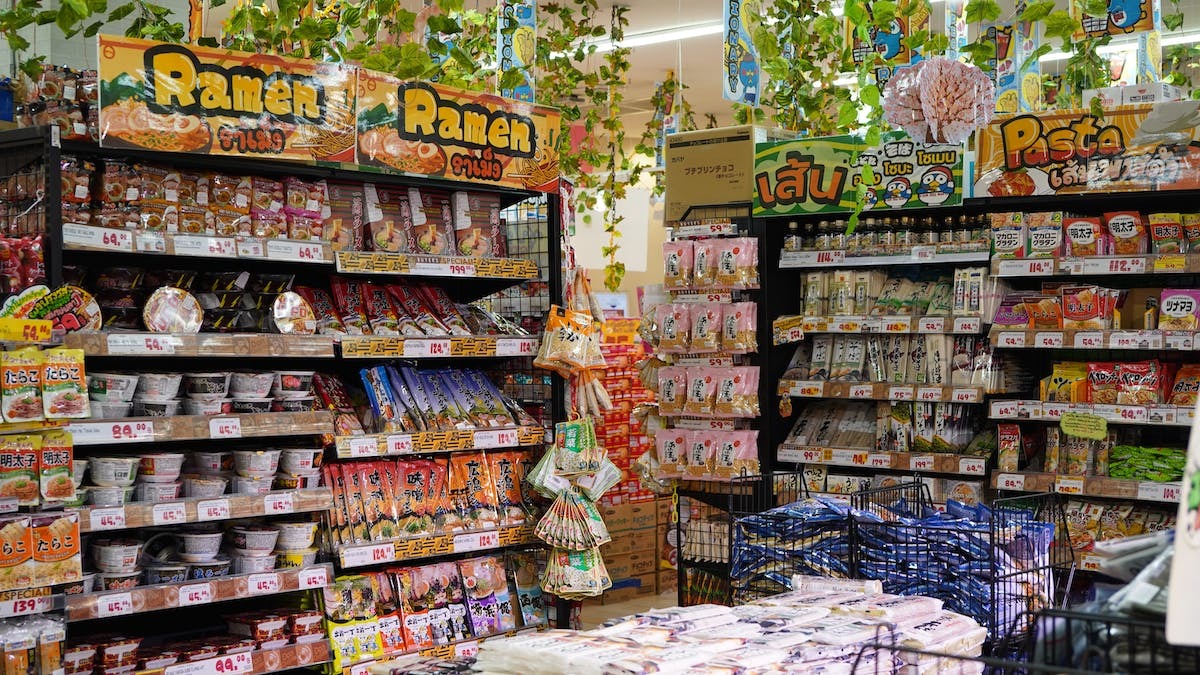
Next comes the second type, known as organizational merchandising. This focuses on the layout of the point of sale to optimize its available space while highlighting key items that attract maximum customers. This can involve an intelligently arranged layout according to a precise logic such as aisle circulation or a carefully thought-out display to effectively showcase each product offered for sale.
The third type is what is referred to as atmospheric merchandising. Here, all elements aimed at making the user experience pleasant are taken into account: soft lighting that subtly highlights certain products, gentle music creating a calming environment conducive to shopping, or even different scents discreetly diffused to evoke a certain feeling associated with a specific product.
Emerging in our ultra-connected society is the latest addition: digital merchandising. This utilizes all the innovative formulas enabled by the internet, ranging from virtual storefronts on social media to personalized algorithms predicting your future desires based on past preferences detected during your previous web browsing.
It is therefore this complementarity between the four types of merchandising that today allows the most technologically advanced brands and retailers not only to maximize their sales but also to retain their increasingly volatile customers in the face of the multitude of offers available in today’s market.

Decoding the Various Forms of Merchandising
In the world of merchandising, presentation techniques play an essential role in attracting customers’ attention and stimulating their purchases. Here are some commonly used strategies.
Staging is an effective technique for creating a strong visual impact. By arranging products theatrically, using strategic lighting, or setting up specific decor, interest can be sparked, encouraging consumers to discover more.
Another approach is to use affinity grouping. This method involves gathering several complementary items in the same area to facilitate searching and encourage cross-selling. For example, in a clothing store, dresses could be grouped with matching shoes and corresponding accessories.
Height positioning also plays an important role in merchandising. By placing certain products on elevated displays or at eye level, they become immediately noticeable to customers moving through the store. This increases their visibility and potential appeal.
The judicious use of colors can also have a significant impact on the customer experience.
Enhancing Products: A Crucial Challenge
In the world of merchandising, presentation techniques play an essential role in attracting customers’ attention and stimulating their purchases. Here are some commonly used strategies.
Staging is an effective technique for creating a strong visual impact. By arranging products theatrically, using strategic lighting, or setting up specific decor, interest can be sparked, encouraging consumers to discover more.
Another approach is to use affinity grouping. This involves placing complementary products close to each other to encourage cross-selling. For example, in a clothing store, tops could be paired with matching bottoms or various accessories that go well together.
Smart placement is also an essential strategy in merchandising. High-margin products should be highlighted and placed at eye level to quickly capture the customer’s attention as they browse the aisle. The layout should be fluid and coherent so that the customer can easily navigate between different sections without feeling lost.
The clever choice of colors can also have a significant impact on sales. Studies have shown that certain colors can influence our emotions and purchasing behavior. For example, red is often associated with a sense of urgency or dynamism, while blue inspires trust and serenity.
The presentation of products in demonstration is another effective technique. By allowing customers to interact with and test products, a sense of ownership and trust is created that can lead to purchase. Free samples or special promotions can also be used to encourage customers to try new products or buy in larger quantities.
The power of digital merchandising should not be overlooked. With the rise of e-commerce, it is crucial to offer a consistent shopping experience between the physical store and the online shop. Attractive images, intuitive navigation, and personalized recommendations are all key elements to maximize online sales.
Merchandising is much more than just arranging products on shelves. It is a subtle art that requires a deep understanding of consumer behavior and impactful visual techniques. By implementing these wise strategies, you can boost your sales and create a memorable experience for your customers.
Boost Your Sales with Effective Merchandising Strategies
In the ever-evolving world of merchandising, you must stay alert to current trends to stand out and attract consumers’ attention. Here’s an overview of the new trends shaping the merchandising landscape today.
Personalization is a major trend in retail. Customers seek a more individualized experience and want to be treated as unique individuals rather than anonymous consumers. Companies are therefore adopting strategies to personalize products or services according to each customer’s specific preferences.
Immersive experience is also in vogue. Brands seek to create captivating sensory environments that literally transport customers into their universe. From stores using virtual or augmented reality to interactive exhibitions, these immersive experiences offer consumers a unique and unforgettable journey.
Sustainability is another key trend in the modern merchandising world. More and more consumers are sensitive to environmental issues and prefer eco-friendly brands. Companies are now integrating this concern into their merchandising strategies by highlighting eco-responsible products or drastically reducing their carbon footprint throughout the supply process.
Experiential merchandising is also gaining ground. Consumers seek meaningful interactions with brands and want to experience unique moments when visiting a store or making an online purchase. Interactive demonstrations, creative workshops, or even the ability to virtually try on products are approaches used to create a memorable and differentiating experience.
The growing role of technology in merchandising cannot be ignored. Augmented reality, artificial intelligence, and predictive analytics are now used to optimize the performance of both physical retail locations and e-commerce sites. With these advanced technological tools, it is possible to collect and analyze real-time data on customers’ purchasing behaviors to continually improve their experience.
It is crucial for any business engaged in retail to stay updated with these emerging merchandising trends. By adopting a proactive and innovative approach based on these new strategies, you can not only boost your sales but also increase your attractiveness to today’s demanding consumers.
The New Trends in Merchandising: Decoding
In this section, we will further explore the specific techniques of merchandising that can help stimulate your sales and maximize your profitability. Here are some of the most effective strategies used by industry experts.
The layout of your point of sale is essential for attracting customers’ attention and optimizing their shopping journeys. It is important to create a clear and organized arrangement, highlighting your key products and facilitating circulation in the store. The judicious use of colors, lighting, and displays can also contribute to creating an appealing atmosphere that encourages customers to buy.
It is crucial to focus on staging. By creating situational displays or eye-catching thematic windows, you can captivate customers’ attention as soon as they enter the store.